

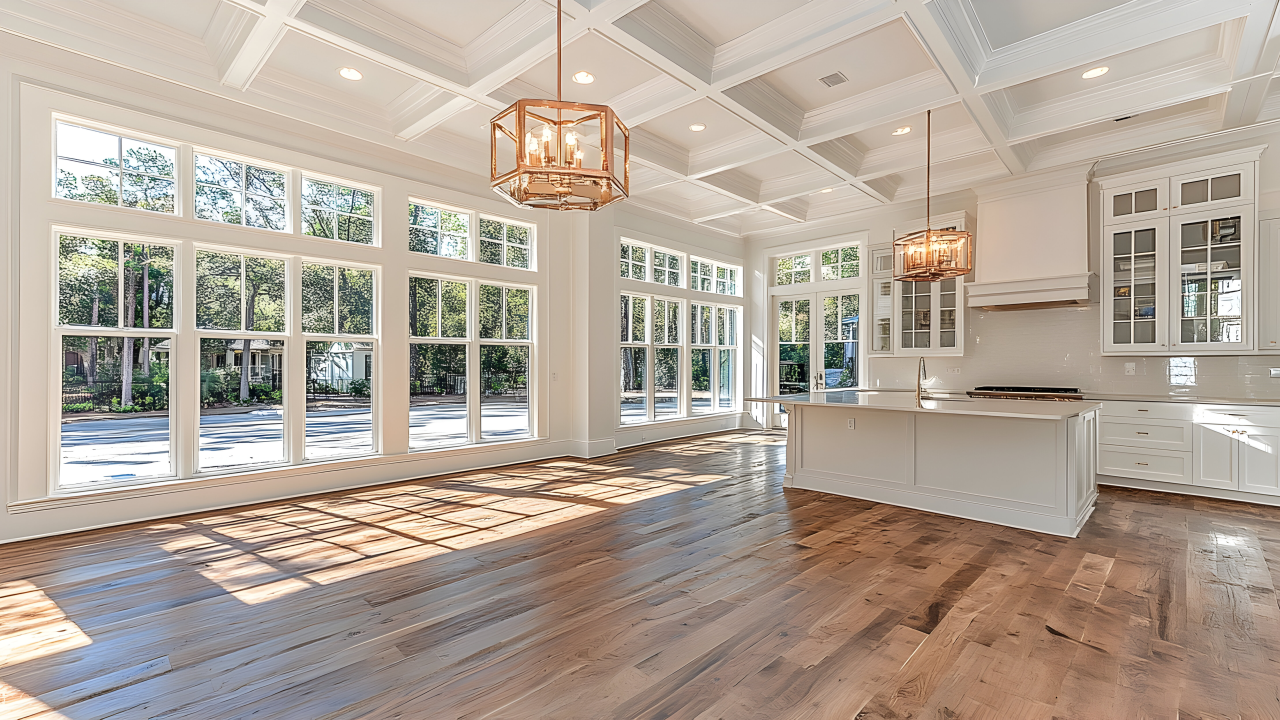
Hardwood flooring remains one of the most sought-after home improvements across Middle Tennessee. Its natural grain, warmth, and enduring value make it a classic addition to living rooms, hallways, and bedrooms. However, when selecting real wood floors in Crossville, homeowners must decide between solid hardwood and engineered hardwood. Because our location on the Cumberland Plateau experiences seasonal shifts between humid summers and cold, dry winters, understanding how each floor type handles local conditions is essential for long-term performance.
Understanding the Cumberland Plateau Climate Impact on Wood
Wood is a natural, porous material that reacts continuously to atmospheric moisture. During humid Tennessee summers, wood fibers absorb moisture from the air and expand. In dry winter months, indoor heating lowers indoor humidity levels, causing wood fibers to contract.
If a wood floor cannot handle these expansion and contraction cycles, visible gaps can open between planks during winter, or planks can buckle and cup during summer. Choosing between solid and engineered hardwood depends heavily on where in your house the floor is being installed and how well your indoor climate is controlled.
Solid Hardwood: Timeless Character and Lifetime Sanding
Solid hardwood is constructed from a single continuous piece of timber, typically 3/4-inch thick. Popular domestic species like White Oak, Red Oak, and Hickory offer exceptional durability and rich graining that matures beautifully over time.
Unmatched Longevity: Solid wood floors can be sanded and refinished multiple times over their lifespan, allowing you to change stain colors or erase decades of surface wear.
Property Value: Original solid hardwood remains a benchmark feature for homebuyers looking for classic craftsmanship and long-term value.
Authentic Feel: Provides a firm, traditional feel underfoot that complements classic architectural styles.
However, solid hardwood must be installed on or above ground level over a wood subfloor. It is sensitive to moisture and should not be installed directly on concrete slabs or in sub-ground basements without specialized moisture barriers and subfloor preparation.
Engineered Hardwood: Dimensional Stability for Humid Summers
Engineered hardwood features a real wood surface layer (wear layer) bonded on top of multiple cross-laminated plies of high-density wood. This cross-ply construction counteracts the natural tendency of wood to expand and contract, giving engineered hardwood exceptional dimensional stability.
Moisture Resilience: Resists warping, cupping, and gapping caused by local atmospheric shifts and ground moisture.
Versatile Installation: Can be installed on all floor levels, including concrete slabs, basements, and ground-level rooms.
Wide-Plank Styling: Because engineered construction resists movement, it allows for wider, modern plank widths (6 inches and wider) that might otherwise gap in solid wood.
While high-end engineered hardwood with a thick wear layer can be sanded and refinished once or twice, thinner engineered products cannot be fully sanded down.
How to Choose the Right Wood Floor for Your Layout
To make the best choice for your Crossville home, evaluate your floor plan and living habits:
Main Levels and Bedrooms over Crawlspaces: Solid hardwood is an excellent investment if you want a lifetime floor and maintain consistent indoor humidity (35%–55%) year-round.
Concrete Slabs, Basements, or Ground Floors: Engineered hardwood is the safer, more durable option that prevents moisture-related floor movement.
Busy Households with Pets: Harder wood species like Hickory or distressed oak finishes in engineered or solid form conceal everyday claw marks and heavy foot traffic.
Matching the right wood structure to your home's layout guarantees a stunning floor that stands up to Tennessee's changing seasons.


